
St. Lucia
NEP/SEP * Energy Efficient Lighting * Hotel Energy Audits * Point de Caille Wind Farm *
Energy Week * Landfill Gas to Energy * Poultry Litter to Energy* Solar Hot Water *
Geothermal * Other
St. Lucia Project Profiles
National Energy Policy / Sustainable Energy Plan Development
Objective: Development of NEP/SEPs in St. Lucia is of particular interest because in 1999 St. Lucia became the first small island state and among the first countries in the world to publicly commit to a comprehensive sustainable transformation of its energy sector.
Description: In 2001, the St. Lucian government approved a comprehensive 10-year Sustainable Energy Plan to advance its ambitious goals. The plan was developed by the Sustainable Energy Office in its Ministry of Planning, Development, Environment and Housing with help from the Climate Institute and the Organization of American States (OAS). Stakeholders including the hotel industry, environmental non-governmental organizations (NGOs), LUCELEC (the electric utility), and other businesses were also involved. Although this plan does not phase out CO2 emissions, it takes impressive strides in that direction, aiming for a 35 % cut in greenhouse emissions from business-as-usual projections by 2010. In 2003 an NEP was formally adopted by the government which called for the development and use of 7% renewables by 2005 and 20% (7MW) by 2010. It also set goals of energy consumption reductions of 5% and 15% by 2005 and 2010 respectively according to the OAS.
Update: In 2006 GSEII began a review of the progress made on sustainable energy projects. The review revealed that some efficiency measures and small-scale renewable energy projects were completed. GSEII's major hope is for a grid tied renewable energy project. GSEII was also assisting the government to write a 5 year implementation plan in 2006 since the government renewed its commitments to meet 2010 targets at this time.
Energy Efficient Lighting Project
Energy Efficiency Lighting Case Study (PDF)
Objective: to reduce the demand for energy by replacing the standard 60-100W incandescent bulbs with energy-efficient 15 watt florescent bulbs. The installation of energy efficient lighting mitigates the demand for fossil-fueled energy, thus saving St. Lucians on their energy bills, as well as lessening burden on the climate.
Description and Results: The project was launched at an energy exhibition during Energy Awareness Week in St. Lucia in 2004. By 2005, the Climate Institute and Climate Care allocated 6,000 energy efficient bulbs to be distributed by the St. Lucian Ministry of Planning. After (and apart from) GSEII's efforts, the Cuban government conducted a similar program in St. Lucia. In October 2008, the St. Lucian cabinet agreed to continue the Energy Saving Light Bulb Project within the Ministry of Communications, Works, Transport and Public Utilities with the eventual goal of banning the use of incandescent bulbs on the island.
Energy Audits & Training Project for Hotel Industry
Energy Audit Training for Hotel Industry Case Study (PDF) Summary Report, April 2004 (PDF, 76 KB)
Objective: to reduce greenhouse gas emissions by enhancing energy efficiency in the hospitality sector. GSEII also wants to increase stakeholder awareness of energy management opportunities (government, colleges, utilities, and the local consultants). A longer term goal of this project is to develop continuity in the energy management training field by supporting the development of a training host in St. Lucia.
Description and Results: In Feb. 2004, a series of training workshops and audits in energy management for the hospitality sector was conducted. Representatives were brought together from key stakeholder groups with an interest in energy management to share ideas and experiences about locally available resources to assist with their energy management needs.
The trainings were part of a project being undertaken by Lewis Engineering Inc., Marbek Resource Consultants, Inc., and the St. Lucia Ministry of Physical Development, Environment, and Housing; and made possible due to the support of the Climate Change Development Fund of the Canadian International Development Agency.
 LUCELEC Point de Caille 4.25 MW Wind Farm
(case study coming)
Objective: to facilitate the transition away from fossil fuels by enhancing grid-connected renewable energy alternatives on SIDS. Wind projects like this one are intended to improve the quality of the general energy supply while reducing the environmental impact of producing energy.
Description and Results: The Government of St. Lucia and the local utility, LUCELEC, showed interest in developing a wind farm on the island. Several sites were studied over time and wind resources were identified. In 2004, land at Point de Caille was identified as one of the areas most suitable for wind farm. The intent was to construct a wind farm in phases and analyze results over time. Unfortunately, the local utility (LUCELEC) could not follow through on this project because the land was bought for a high price by the hospitality industry.
Energy Week (2004)
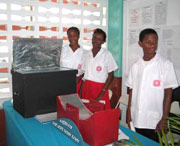 GSEII co-sponsored St. Lucia's second Energy Awareness Week from December 6-10, 2004. The theme was, "A Vision for St. Lucia's Energy Future" and it was an important step in St. Lucia's progress towards greater energy efficiency and renewable energy use. It helped facilitate development of a solid energy policy for St. Lucia and was also instrumental in raising international awareness.
Outreach: included a TV and radio broadcast from the Minister for Physical Development, Environment & Housing, and an energy supplement placed in the local newspaper. The supplement focused on interagency, local, and regional energy initiatives, and opportunities for energy management in the safety, and electricity and transportation sectors.
Events: Energy Exhibition and school project competition- an inter-secondary school science competition with about 50 participants with 10 projects.
St. Lucia Ciceron Landfill Gas to Energy Project
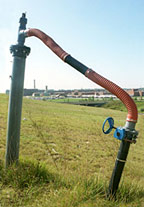 Objective: Generating electricity for the national grid from 11 year's worth of solid waste dumped at the Ciceron landfill (closed since 2003). The planned 400kW plant powered by captured methane emissions will serve as an example as the first of its kind in the Caribbean Island states and present opportunities for the transfer and installation of such technologies elsewhere. Project developers plan to market over 8,700 tons per year of carbon emission reduction credits from the project via the Clean Development Mechanism.
Description: Estimations of methane production at the site will be very important if consideration is to be given to potential validation of a landfill gas-to-energy project under the provisions of the Kyoto Clean Development Mechanism. Collecting and burning the methane would lead to total estimated methane avoidance from the proposed project on the order of 8,713.6 tons CO2 equivalent/average year. Since methane would be released without the plant, the reductions could be claimed as avoided emissions. The project was marked to receive $2 million in the GSEII Phase 2 Concept note
Update: The UNIDO-GSEII team successfully completed the pre-feasibility study for this project in the spring of 2005. Unfortunately, this project was cancelled.
Poultry Litter to Energy Project
Description: GSEII supported efforts to examine using energy from poultry litter to substitute grid electricity in a local egg producing facility. The project also considered using the litter to heat a small chicken nursery. The host institution, Fresh Eggs, Ltd., expected that heat to increase production levels of its 11,000 laying hens. Supposing 24-hour a day use of electricity at the site, the power capacity of the proposed plant in St. Lucia would be in the range from around 7-11 kW.
Results: A feasibility analysis completed in March 2005 proved that this project would not be economically viable.
Solar Hot Water Systems Project
Solar Hot Water Systems in the Caribbean Case Study (PDF)
Objective: Rising electricity costs put a strain on consumers in St. Lucia. Relying on even relatively inexpensive but inefficient electric water heaters can result in substantial costs over time with repect to solar water heaters, whcih cost more up front but pay-off over their lifetime. Because of this relatively high up-front cost, which discourages consumers from purchasing solar hot water heaters, GSEII developed a program to increase consumer awareness of the potential savings from using solar hot water heaters and to help finance purchases of solar hot water heater systems.
Description: GSEII began in Fall of 2005 by providing training for representatives from some of St. Lucia's credit unions in order to help make sure financing options were distributed properly. A $46,000 loan fund was also establish by the Trust for the Americas, St. Lucia Cooperative League Limited, and the organizational body of the country's credit unions to help extend credit to lower and middle income families seeking to purchase solar hot water heaters. Yet, because by Spring of 2006 only a few applications had been submitted and by peoplpe who did not meet the income qualifications, the stipluations and income requirements of the program were modified followed by an agressive consumer awareness campaign. By the summer of 2007, the program was still experiencing implementation problems due to the lack of a fast-track mechanism, lack of communication and public awareness, and poor financing options. Based on a meeting on these problems, further recommendations to adjust the program were made.
Update: Recommendations were implemented in October of 2007. Unfortunately, however, only two new loans were issued by January of 2008. As of 2009, no new information on the success of this program was available.
Geothermal Energy Project
Geothermal Energy in the Caribbean Case Study (PDF)
Objective: Interest in developing geothermal energy on St. Lucia dates back to 1951. Geothermal energy is predicted to be able to supply a large portion of energy demand. Therefore, the OAS, as a part of the Geo-Caribes project, has worked to assess the technological capability of developing geothermal energy on St. Lucia.
Description: In 2004, GSEII, under the leadership of the OAS, partnered with Massachusates Institute of Technology (M.I.T.) to gather more data on prospective sites for developing geothermal energy. The study found that the feasibility of developing geothermal energy in these areas was high. However, a treaty signed in 2004 with UNESCO made the Sulfur Springs and surrounding areas, where geothermal was highly prospectful, a World Heritage Site. Also, although United Network of the Eastern Caribbean (UNEC, a Canadian firm) was able to obtain an exclusive liscense to develop geothermal energy on St. Lucia in 2007, power purchase agreement negotiations with LUCELEC, the national electric utility, have been problematic.
Update: Although the state of these negotiations was on hold for several years, Qualibou Energy (a result of a reverse acquisition of UNEC) announced in 2010 that it had signed an agreement with the government to begin drilling and developing as much as 170 MW of geothermal energy. Though Qualibou is not a part of GSEII, GSEII will be ready to step forward and provide asisstance in negotiations and policy developments.
Other Past & Present Projects
- Worked to help develop a solar photovoltaic demonstration project by planning for the installation of a 1.8kW panel on a school.
- Conducting an electricity energy systems analysis with the World Bank focused on how climate change impacts electricity generation in relation to extreme weather, changing rainfall patterns, and emergencies that disrupt power service. As of 2009, research into Saint Lucia's geothermal resources was thorough but an additional assessment of the island's market potential for renewable energy is needed. http://cipore.org/participating-countries/st-lucia/
GSEII Events in St. Lucia
April 2006. St. Lucia Energy Policy Stakeholders Meeting
September 2005. Caribbean Solar Financing Program Training Session